
[ENGLISH VERSION BELOW]
Dr Bennett Shapiro (March 26, 1932 – November 14, 2021) to człowiek, którego poznałem w 2018 roku dzięki Karolinie Rynkowskiej i Elżbiecie Pakocy. Jego celem na tamten czas, jak wspominał, było testowanie, czy jest możliwe, aby psychoterapeuci, którzy nie są terapeutami bioenergetycznymi, mogli nauczyć się i stosować „Life Force” w swojej praktyce (na tamten czas byłem psychoterapeutą ericksonowskim, nauczycielem psychoterapii oraz hipnozy klinicznej, dobrze znałem Ego State Therapy oraz TRE™).
Drugim celem była chęć dzielenia się swoimi odkryciami ze znacznie szerszym kręgiem odbiorców, niż tylko środowisko bioenergetyczne. Tutaj Ben, w swoim odczuciu, nie uzyskał zrozumienia; jego odkrycia były i są życzliwie nazywane „pracą z negatywnością”, co jest głębokim nieporozumieniem, a ćwiczenia „Life Force” zabawnymi i humorystycznymi.
Od połowy lat 80tych Ben tworzył innowacyjne programy psychoterapeutyczne, ale nie wycofał się z działalności w 2016 roku lecz kontynuował pracę. Zachęcany postawą i słowami Lowena, rozwijał Bioenergetykę, a w jej obrębie szczególne rozumienie procesów dysocjacyjnych towarzyszących zaburzanym procesom rozwojowym. Chociaż pojęcia nawiązujące do dysocjacji są obecne w Bioenergetyce, sposób w jaki Ben je rozwinął, jest absolutnie wyjątkowy i ekstremalnie niedoceniony, by nie powiedzieć – dobrodusznie zbywany. “Acceessing to Your Life Force”, w skrócie Life Force, to efekt wieloletniej pracy Bena, pracy, która była znana Lowenowi, którą też szanował. Ben kontynuował tworzenie „innowacyjnych programów” i właśnie z nich zrodziło się „Life Force”. Nie mam pewności, czy jakiś tekst na ten temat Ben opublikował w „Bioenergetic Analysis”, jeśli tak, to poniżej podaję swój e-mail do kontaktu – chętnie poznam.

Ben był pragmatyczny i precyzyjny w przekuwaniu swoich przemyśleń w kreatywne ćwiczenia, które zaczął nazywać „ćwiczeniami Life Force” i w koncepcję terapeutyczną. Tworzył, testował, wyciągał wnioski i znów tworzył, by zyskać wreszcie pewność i otwarcie o tym mówić, że opracował innowacyjne bioenergetyczne podejście do terapii przez ciało. Zdawał sobie sprawę, że choć włożył ogromny wysiłek w przekazanie swojego sposobu myślenia innym, nie spotkał się z odbiorcą, który miał dość odwagi, by w obrębie Bioenergetyki ze swobodą rozwijać to podejście i tym bardziej zostać uszanowanym w jej ramach. Ben pragnął, aby tak się stało. Chciał uznania swojego dorobku, co mam nadzieję nastąpi i być może znacznie więcej osób na tym pracuje, włącznie ze mną.
Bez wątpienia „Life Force” (LF) wyrasta z bioenergetyki i nią jest. Bez Analizy praktykowanie LF jest ograniczone i nie ma siły jaką daje to myślenie.
Niedawno przeczytałem w którymś z postów, jak bardzo Analiza nadąża za odkryciami: neuronauki, że wyciąga wnioski z teorii poliwagalnej, zna teorię przywiązania, itd., a nie nadążyła za jednym z największych odkrywców we własnym gronie. Gdzie jest „Life Force”? Na tej samej zasadzie można zapytać, jak to się stało, że psychoterapia przez ciało nie jest nurtem tylko wciąż egzotyczną techniką, na którą terapeuci krzesełkowi patrzą z pobłażaniem i odżegnują się od dotyku, bo ten zawsze budzi w nich lęk przed przekroczeniem. W Polsce, dzięki między innymi Wojciechowi Eichelbergerowi oraz Jackowi Santorskiemu, Analiza Bioenergetyczna znana jest od lat 80-tych, trochę później powstało Polskie Stowarzyszenie Analizy Bioenergetycznej, zaczęły gościć różne metody pracy z ciałem, ale to nie wystarczyło, żeby ludzie reprezentujący te podejścia wspólnie ze swoim zagranicznym wsparciem podjęli decyzję o normalizacji myślenia o terapii przez ciało jako nurcie, który ma różne odcienie, ale jest odrębnym nurtem i innym niż to co powszechnie się rozumie jako nurt humanistyczno – doświadczeniowy. Analiza jest tam dosłownie upychana nogami samych przedstawicieli Bioenergetyki, ale dla naszego podejścia to bardziej prokrustowe łoże. Warunki prawne od wielu lat pozwalały na swobodę działania i wciąż pozwalają. Co powstrzymuje ludzi przed działaniem? Strach przed zanieczyszczeniem istoty metod, które promują? Jest zbędny. Różne stowarzyszenia już dawno ustaliły ramy tego, co powinien umieć bazowo psychoterapeuta. Stworzenie kursów i certyfikacji wewnątrzkrajowej dla nurtu psychoterapii przez ciało jest proste i jestem przedstawicielem jednego ze stowarzyszeń, które certyfikuje psychoterapeutów terapii przez ciało i rozwija współpracę w tym zakresie.

Wracając z dygresji: Ben zastanawiał się, co powoduje, że błyskotliwi, inteligentni, doświadczeni ludzie potrafią tak się zamykać na współpracę, porozumienie, jak znajdują błyskotliwe wyjaśnienia, dlaczego nie mogą czegoś zrobić, itd. Znalazł kilka odpowiedzi lecz cały czas czekał na uznanie w obrębie środowiska, z którego wyrósł i które uczył. Moje refleksje mogą brzmieć jak patetyczna skarga, bo przecież tyle zasług Benowi oddano. Ale, gdzie jest „Life Force”?
Ben wspominał, że Lowen uczył go otwartości i gotowości do eksperymentowania. Systematyzacja i rutyna szybko zaczynają imitować żywotność rozwijającej się, świeżej i poszukującej praktyki. „Dojrzała” praktyka „wie jak jest”? To hamuje rozwój każdej metody i wielopłaszczyznowo ogranicza horyzonty myślenia, przytępia wzrok, zmusza do stania na straży jakiejś formy poprawności zamiast podążać za tym, gdzie prowadzi sama metoda. Lowen, który odszedł od Wilhelma Reicha, dobrze rozumiał jak bardzo „sztywność” ogranicza, dlatego nie zatrzymał się w miejscach, w których inni się zatrzymywali, „bo tak się pracuje”. Gdy Lowen chciał się czegoś uczyć, to się uczył, nie mówił, że to czy owo nie znajduje się w obrębie szkolenia bioenergetycznego, bo je plastycznie konstruował. Ben właśnie takie wartości mi przekazał i tak pracował.
Na ostatnim warsztacie jaki Ben poprowadził w Victorii, życzył mi i pozostałym uczestnikom, abyśmy rozwijali „Life Force”, uczyli i dzielili metodą ze wszystkimi. Osobiste zobowiązanie, jakie otrzymałem od Bena, z pewnością było wtedy na wyrost, ale świadczyło o głębokiej potrzebie dzielenia się jak i zaufaniu, że dar zostanie właściwie spożytkowany. Ben zakładał, że osoby, którym do tej pory przekazał swoje materiały i wiedzę będą się nimi szeroko dzieliły, ale nikt nie wie, kto co właściwie otrzymał.
Gdy opowiadam o LF, gdy z pacjentami robię ćwiczenia LF oraz bioenergetyczne, przekazuję tę wiedzę psychoterapeutom, jestem pytany, gdzie można więcej przeczytać, dowiedzieć się, posłuchać. Najprościej odpowiedzieć, że trzeba doświadczyć, ale wiemy z pewnością, że uczymy się na wiele różnych sposobów, a nauka przez doświadczenie jest tylko jedną z wielu możliwości. Enigmatyczne odsyłanie do „doświadczenia” jest odbierane jak protekcjonalizm, czyli jakaś forma biernej agresji. LF można opowiedzieć i robię to.
Znalazłem niedawno wywiad, w którym Dr. Giuseppe Cappelletti opowiada o „Life Force”. Wywiad ten jest częścią pracy z psychologii klinicznej Dr. Ruggero Ghiglia, która nosi tytuł „Dostęp do siły życiowej: podejście psychoterapeutyczne Bennetta Shapiro”.
Napisałem do nich obu i przez długi czas nie miałem odpowiedzi, ale w końcu ją otrzymałem. Dr Ruggero Ghiglia odpowiedział i udostępnił swoją rozprawę, którą obronił na Uniwersytecie w Turynie. Przeczytałem ją z wielkim zainteresowaniem i stwierdziłem, że jest to pierwsza na świecie praca prezentująca AYLF w tak kompleksowy sposób.
W swojej rozprawie dr Ruggero Ghiglia stawia dwa kluczowe pytania:
– Czy metodę AYLF można uznać za kompletną, spójną metodę psychoterapeutyczną?
– A może raczej za rozszerzenie klasycznej Analizy Bioenergetycznej, która koncentruje się na specyficznych aspektach, takich jak praca z oporem?
Autor oferuje niuansowane odpowiedzi, pokazując – z szerokiej perspektywy teoretycznej i praktycznej – jak psychoterapia ciała doszła do obecnego stanu i jakie znaczenie ma praca dr. Shapiro. Zygmunt Freud, Sándor Ferenczi, Wilhelm Reich, Carl Gustav Jung, Donald Winnicott, Alexander Lowen, Eric Berne – wszyscy oni stanowią kontekst dla podejścia Bennetta. Ta szeroka, humanistyczna perspektywa pokazuje, że w ramach bioenergetycznego myślenia istnieją specjaliści o szerokim spojrzeniu, dostrzegający współzależności, które często są pomijane lub niedoceniane w ramach ścisłej praktyki klinicznej.
Mam szczerą nadzieję, że praca dr. Ruggero Ghiglii zostanie opublikowana i będzie dalej rozwijana jako krytyczna, meta-poziomowa refleksja, która przyczyni się do rozwoju metody w ramach Analizy Bioenergetycznej i będzie inspiracją dla innych praktyk terapeutycznych.
Ben, co jest powszechnie znane, nie sięgał w swojej pracy i myśleniu do innych kategorii, niż bioenergetyczne. Pozostał wierny Lowenowi i sobie, ponieważ rozumiał ten język i potrafił wszystkie istotne procesy psychiczne de-konstruować oraz re-konstruować w ten sposób. Był prawdziwym humanistą, który chciał rozumieć rzeczywistość psychofizyczną, uczyć oraz nadawać temu estetyczną, przystępną i humorystyczną formę.
Czym jest Life Force? Sam Ben mówił, że „Life Force” to podejście terapeutyczne wyrosłe w obrębie Analizy Bioenergetycznej i definiowane jej językiem. Rozwija jeden z obszarów Analizy związany ze skutkami urazów, czyli rozszczepianiem, którego efektami jest tworzenie wewnętrznych psychofizycznych całości, które mogą funkcjonować na spektrum od: niezależnych podosobowości (nawet bez formalnego stwierdzenia zaburzeń konwersyjnych), posiadających określoną charakterystykę biomechaniczną (bloki energii), fizjologiczną oraz aspekty poznawcze, charakterystyczne dla okresu powstania, do: fragmentarycznych, pozostających poza głównym obiegiem psychiki części, posiadających wszystkie możliwe cechy psychofizyczne.
Można nazwać je introjektami, wewnętrznymi reprezentacjami, nieświadomymi postaciami, lub stanami ego, co w ostatnim przypadku zrodziło Terapię Stanów Ego (EST) – metodę skonceptualizowaną przez Johna G. Watkinsa, a wywodzoną z psychoanalitycznego myślenia Paula Federna i oczywiście Zygmunta Freuda.
Koncepcja segmentacji osobowości nie jest nowa. Kolejne pokolenia specjalistów kreują własne wersje pracy, które się na tym opierają. Bennett Shapiro ma tutaj swój wyjątkowy wkład. Wszystkie znane mi wersje intencjonalnej pracy ze stanami ego definiują stany ego jako zjawiska psychiczne i na tym rozumieniu opierają pracę z nimi. Nawet jeśli te podejścia, w tym EST i jego potomek – IFS (System Wewnętrznej Rodziny) mówią o pracy z somatycznymi stanami ego, to ich główne założenie wciąż opiera się na psychiczności, której funkcją są stany emocjonalne mające swój korelat w fizjologii ciała. To determinuje rozumienie pacjenta, zaburzeń, definicję zdrowia i leczenie.
Praca z cieniem wg Carla Gustava Junga również wpisuje się w ten trend, podobnie jak Terapia Skoncentrowana na Przeniesieniu Otto Kernberga, którego Ben cytował, a cytat ten ustawił jedną ze ścieżek mojego kształcenia. Wyjątkowo zacytuję: „Uwolnienie się od swoich introjektów jest absolutnie niemożliwe dla klienta, jeśli terapeuta nie jest w stanie zidentyfikować się z tym, co klient na niego nakłada. Terapeuta nie tylko musi być w stanie zidentyfikować się z zarządcą obozu koncentracyjnego, z oprawcą w dyktaturze, z seksualnymi odczuciami kazirodczego ojca, czy z sadystyczną matką, ale musi również czuć przyjemność niszczenia, przyjemność zrzucenia bomby, przyjemność odczuwania sadystycznej agresji, ponieważ wszyscy posiadamy gotowość, by robić to w swej nieświadomości” (Otto F. Kernberg, Persönlichkeitsentwicklung und trauma (im) Persönlichkeitsstörungen, Theorie und Therapie, 1999, t.3, ss 5-15). Jak terapeuta miałby to zrobić siedząc w fotelu i przeżywając wszystko we własnym wnętrzu, czując lęk przed własną ekspresją, ponieważ nigdy laboratoryjnie jej nie eksplorował? Pytanie retoryczne.
Ben poszedł znacznie dalej, ponieważ stworzył Bioenergetyczną i szeroką wersję Terapii Stanów Ego. Założenie, że osobowość również kształtuje się w fizycznej a więc i fizjologicznej, morfologicznej strukturze ciała, wpływa na rozumienie tego, co nazywamy stanami ego i jak z nimi pracujemy. Gdy przedstawiłem Benowi swoje wnioski (już wtedy znałem dobrze hipnozę i EST), zastanowił się i powiedział: „ja tak nie myślę… ale to możliwe”. Ben myślał jedynie w kategoriach Analizy, dzięki czemu nie musiał porównywać żadnych systemów między sobą, uzgadniać definicji, absorbować założeń, które nie wyrastały z Bioenergetyki. Dlatego „Life Force” chyba jako jedyne oferuje bioenergetyczne myślenie o terapii stanów ego, czyli bazujące na fizycznej pracy ciała, biomechanice, fizjologii, morfologii, witalności, jako przejawach życia psychicznego, stawiając te właśnie przejawy na pierwszym miejscu i z nich wywodząc technikę terapeutyczną.

Ben traktował stany ego bardzo szeroko, bez ograniczających ram przypisywanych im funkcji, np. obrońca, bohater, zranienie, itd. Funkcje wynikały z procesu terapii, zaś główne stany mają charakter tak ogólny, że dają dużo więcej możliwości twórczych terapeucie. Nie wchodząc w szczegóły są to: Naturalne Dziecko, Dorosły, Diabły, Zranione Dziecko. Ben wylicza pięć celów Life Force:
- Wzmocnienie Dorosłego (funkcje poznawcze, intelekt, kontrola, kalkulacja) danej osoby, dojrzałość, umiejętność doświadczania neutralności powiązanej z adekwatną oceną realności; zainteresowanie tym, co dzieje się wewnątrz i na zewnątrz nas,
- Ożywienie Dziecka Naturalnego, tego, którym się urodziliśmy (a nie Pierwotnie Zranionego), które dąży do pełni ekspresji i wzrostu. Naturalne Dziecko to nasze ciało.
- Połączenie Dorosłego z Naturalnym Dzieckiem. Jak mówił Ben, ta relacja przypomina kontakt Dziadka (metafora odległości doświadczeń życiowych) z Wnuczkiem. Ponieważ Dziadkowie poszukują siły życiowej naturalnego dziecka – swojego ciała, stracili ekscytację światem choć wciąż jej pragną, mogą uszczknąć tej energii dając w zamian swoje rozumienie życia i dystans,
- Czwarty aspekt to praca z humorem i tak żartobliwie jak tylko to możliwe. Humor pozwala łatwiej nawiązywać kontakt z tym, co jest śmieszne i bawi. Ma to też być zachęta do samodzielnej kontynuacji ćwiczeń Life Force,
- Piąty aspekt to Honorowanie Oporu, który ujawnia się na poziomie emocji, granic, kontaktu, jako niechęć do nawiązywania kontaktu z samym sobą oraz innymi.
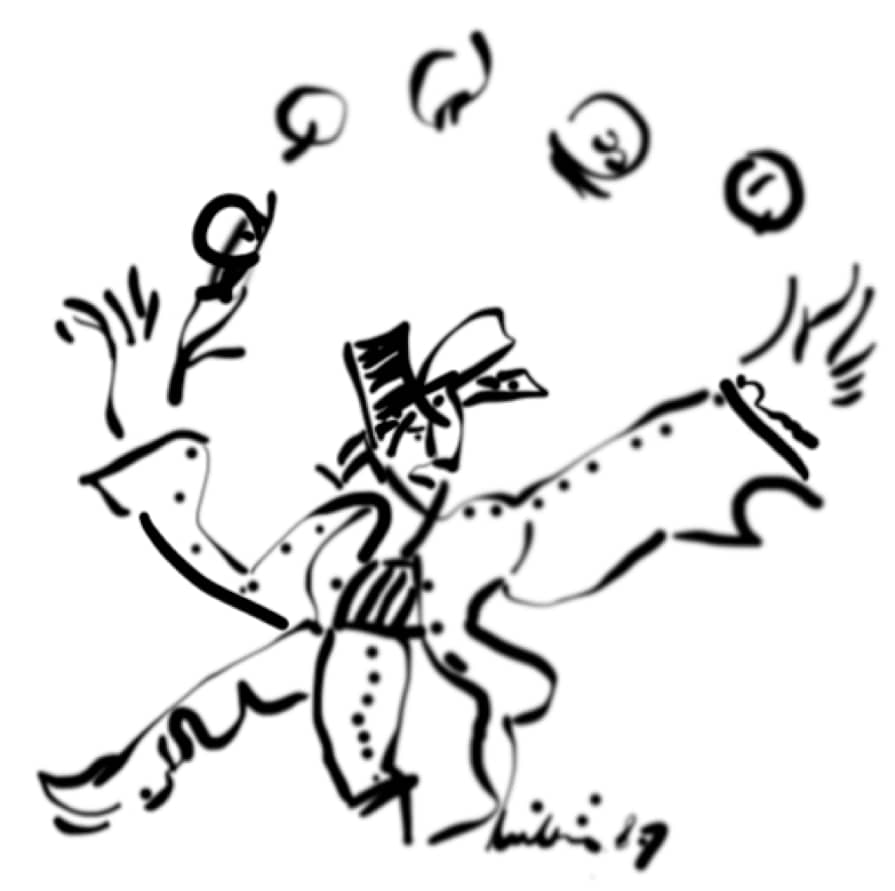
Ben posługiwał się metaforą pięciu palców dłoni: środkowy palec to Dorosły, mały palec jest ożywionym Dzieckiem Naturalnym, łącznikiem jest palec serdeczny. Humor symbolizuje palec wskazujący, zaś kciuk – Opór. Inną metaforą tego podejścia jest Żongler żonglujący pięcioma kulami. Jest to obraz zaprojektowany przez żonę Bena, artystkę. Żongler jest postacią, która bawi innych, dostarcza rozrywki i potrafi utrzymać w powietrzu wiele kul jednocześnie. Jest ekspertem.
„Life Force” to podejście, które można nazwać terapią składającą się z pięciu rodzajów terapii. Terapeuta pełni tutaj proaktywną rolę – jego interwencje stanowią wyzwania dla obron ograniczających żywotność klienta. W pewnym sensie jest to podejście strategiczne, podobnie jak ericksonowskie i podobnie przesycone zjawiskami transowymi. Choć Ben słowem nie wspominał o hipnozie klinicznej, miałem wrażenie, że wie jak się nią posługiwać. Zdawał sobie sprawę, że ma mało czasu, dlatego był stanowczy, a gdy miał wrażenie, że się ociągam w szkoleniu czy terapii, mówił, że „Life Force” jest dla dorosłych ludzi. Dorosłych, czyli zdających sobie sprawę z tego, po co się uczą, mają wystarczającą samoświadomość, umiejętność dbania o swoje afekty i nie wymagają już opieki w ramach relacji terapeutycznej ani szkoleniowej. Opiekę potrafią zapewnić sobie sami.
Ten złożony model odzyskiwania siły życiowej realizujemy, między innymi, przez pobudzanie obron – „diabłów” (personifikacje ochronnych, adaptacyjnych stanów ego) w postaci ich energetyzowania (psychofizycznego) oraz asymilowania ich siły. To właśnie „diabły” są tymi częściami, które sprawiają, że osoby takie jak on, nauczyciele, terapeuci, ludzie posiadające jakąś władzę, gdy doświadczają własnej niewygody w kontakcie, projektują ją – swoje „diabły” na zewnątrz, na grupę szkoleniową, uczestnika, pacjenta. Następnie wtórnie odczytują reakcje drugiej strony jako przeniesienie, bez trudu udowadniając, że kłopot jest gdzieś indziej, niż w nich. Projektowanie „diabłów” działa oczywiście na zasadzie sprzężenia zwrotnego i zadania terapeuty są tu określone logiką procesu terapeutycznego.
Działania terapeuty który nie jest świadomy tych zjawisk lub ma świadomość jedynie deklaratywną, są jatrogenne i często prowadzą nie tylko do przygodnej przemocy, jak mówi dr Nilofer Kaul, psychoanalityczka z New Delhi, ale też do tworzenia struktur, które „dla dobra organizacji, metody, pacjentów” nieświadomie, z czystym sumieniem szkodzą, a gdy zauważą negatywny efekt swoich działań, zręcznie te zachowania usprawiedliwiają, racjonalizują, wycofują się.
Zdaniem Bena, jeśli słyszysz siebie (lub kogoś), który chce coś robić dla dobra innych, miej się na baczności. Pod tym względem Ben był najbardziej zaangażowanym nauczycielem jakiego spotkałem. Śledził własne „diabły”, bez obaw mówił o nich, wypuszczał je na zewnątrz i wspólnie omawiał.
„Diabły” można identyfikować zarówno na poziomie jednostkowym jak i organizacyjnym. O działaniu „diabłów” informuje nas głównie przeciwprzeniesienie, które w rozumieniu Bena jest pełnią psychosomatycznego doświadczania siebie w kontakcie z innymi. Gdy w trakcie kursu terapii bioenergetycznej przeczytałem tekst Vity Heinrich-Clauer na temat rezonansu somatycznego, skojarzyłem pochodzenie tej koncepcji. Zdecydowanie nie trzeba było czekać na konceptualizację Lowena tej kwestii, ani liczyć na domysły, czy własne intuicje, ponieważ zjawisko rezonansu somatycznego i limbicznego, które mocno brzmi w opisie Vity zostało już wcześniej rozpoznane a w obszarze psychodramy gości równie długo jak koncepcja pancerza mięśniowego w bioenergetyce. Można powiedzieć, „ale to nie jest bioenergetyka”. Owszem, nie, ale to tym bardziej wskazuje na konieczność wyposażania terapeutów bioenergetycznych w wiedzę o więcej niż jednej teorii rozumienia zjawisk psychofizycznych. Lowen nie musiał dbać o to, ponieważ jako psychiatra już posiadał znakomicie opanowany model nozologiczny, psychoanalityczny oraz bioenergetyczny Wilhelma Reicha. Nie jestem pewny czy Lowen zachęcał swoich uczniów, aby studiowali medycynę tak jak on, żeby posiadać tę wiedzę, aby nie musieć jej zgadywać, ani czekać na wyjaśnienia. Jednocześnie Lowen nie miał żadnych ograniczeń w rozwijaniu tego, co go interesowało i wplatał to w swoją terapię. Tej swobody nie mają już jego następcy, a tym bardziej kolejne pokolenia, dla których Bioenergetyka wygląda jak spiżowy pomnik. Ben pokazał mi, że żadna terapia ani też Bioenergetyka nie jest pomnikiem i że intencją mało którego twórcy jest zatrzymywać się gdziekolwiek. Wilfred Bion odszedł ze ścieżki Melanie Klein i rozwinął własną, Jacques Lacan został nawet wyrzucony z Towarzystwa Psychoanalitycznego z powodów etycznych i też rozwinął swoją terapię. Mało brakowało, aby Milton H Erickson również został usunięty z towarzystwa, które sam założył. Być może Bennett obawiał się podobnej historii, dlatego nie naciskał, lecz po prostu z pokorą czekał na uznanie i włączenie jego odkryć w nurt wielkiej rzeki jaką staje się Analiza.
Czym jest Siła Życiowa zdaniem Bena? To kierunek zawarty w każdym żywym organizmie prowadzący ku temu, aby osiągnąć pełnię swojego rozwoju, na wszystkich możliwych poziomach. Siła Życia jest naszym prawem i potencją. Nigdy nie osiągamy pełni potencjału Siły Życiowej, jest ona ideałem, do którego możemy dążyć całe życie. W podobnym duchu wypowiada się David Berceli, gdy mówi o możliwości stałego poszerzania przestrzeni bezpiecznego połączenia z innymi ludźmi. Wie, co mówi.
W efekcie złożonych okoliczności i doświadczeń, część naszych spontanicznych impulsów do wyjścia na świat zostało sfrustrowanych i zahamowanych w postaci „diabłów” czy zranionych psychosomatycznych stanów ego. To efekt działania mechanizmów adaptacyjnych.
Choć widziałem, że ćwiczenia „Life Force” nazywane są przyjemnymi, prostymi i zabawnymi, to mogą się nimi stać po naprawdę długim czasie stosowania. Jeśli robić je uczciwie, za każdym razem potrafią wyciągnąć z nas to, na co nie chcemy patrzeć. To nie jest ani przyjemne, ani zabawne, choć intensywność ćwiczeń może uwalniać tak dużą ilość energii, że układ nerwowy ćwiczącego zareaguje natychmiastową dysocjacją i wyrzutem sporej dawki endorfin. Wskutek tego ćwiczenia mogą być odbierane jako całkiem ekscytujące i tak zapamiętywane. Ben zdawał sobie sprawę jak ten mechanizm działa i że przekroczenie granic osobistego bezpieczeństwa ewokuje mechanizmy obronne. Nikt nie jest od tego wolny, zwłaszcza nauczyciele psychoterapii oraz osoby posiadające władzę, ponieważ im już nie ma kto zwrócić uwagi, a robienie tego może być kosztowne, nawet jeśli koszt jest jedynie emocjonalny. Jedynie.
Na kolumnie stojącej niegdyś przy wejściu do świątyni Apolla w Delfach wyryto dwie słynne maksymy: „Poznaj siebie” (gnothi seauton) i „Nic w nadmiarze” (meden agan). Filozofia terapii Bena zawiera je w sobie.
Powyżej zarysowałem bardzo skromny szkic tylko jednego aspektu pracy Bena – wątek z „diabłami” oraz swojego rozumienia kontekstu powstania i recepcji Life Force. Nie zawierałem przypisów, nadałem temu osobistą formę. Będę kontynuował pracę nad Jego dziełem, będę szkolił, patrzył sobie na ręce, superwizował siebie i innych, prowadził terapię, oraz, mam nadzieję, współpracował z osobami, dla których Ben był i jest równie ważny jak dla mnie. Ważny przeniesieniowo, ojcowsko jak i zwyczajnie jako człowiek, który ujął mnie swoją Siłą Życiową i błyskotliwością.
Wszystkie aspekty podejścia terapeutycznego Bena są na wskroś bioenergetyczne. Choć wydawało mi się wcześniej, że znając założenia mentalnej pracy ze stanami ego można obejść się bez bioenergetyki, lub innego podejścia bazującego na pracy Wilhelma Reicha, to jednak nie jest to możliwe. Różnica jest fundamentalna i napisałem o niej wcześniej. Ucieleśniając oba założenia terapeuta może znaleźć swój złoty kluczyk, który na pewno pasuje do jakiegoś zamka, a jak jest zamek to musi być i skrzynia kryjąca skarby i tylko trzeba przekręcić klucz w zamku i otworzyć wieko skrzyni, żeby się do nich dostać i spożytkować.
Ben, to dla Ciebie
ENGLISH VERSION
Dr Bennett Shapiro and his “Accessing to Your Life Force” AYLF
Dr. Bennett Shapiro and His “Accessing Your Life Force”
by Krzysztof R Karauda, Ph.D.
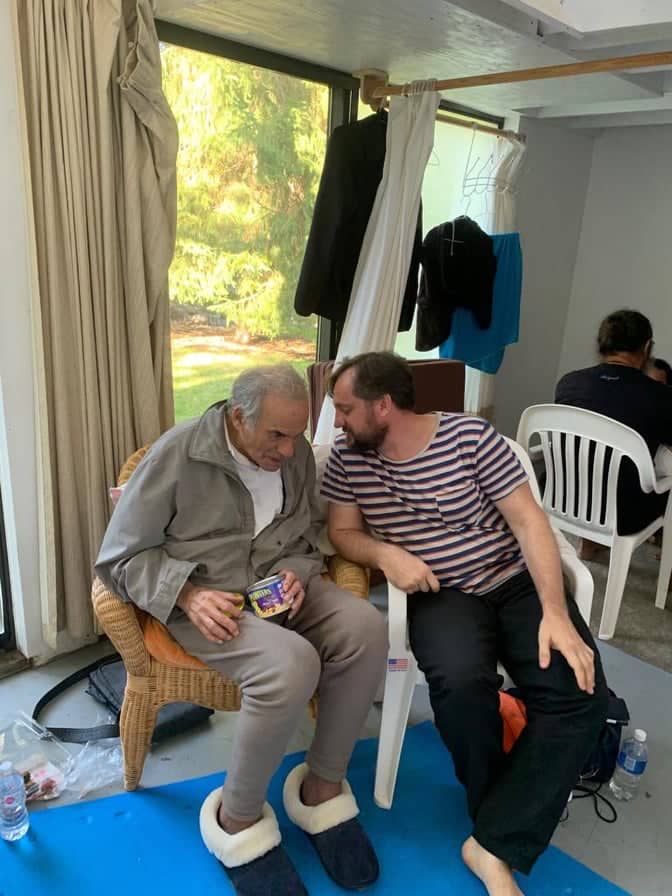
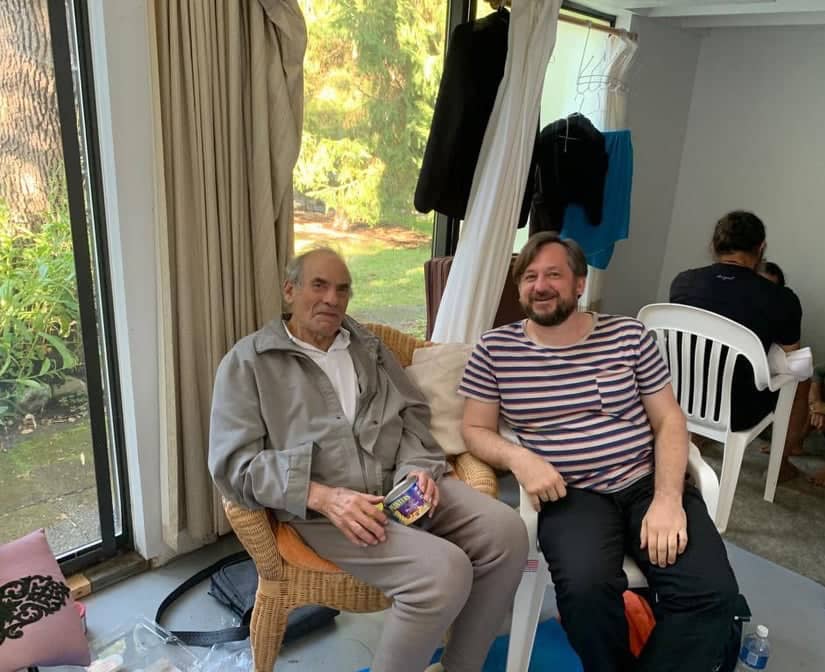
I met Dr. Bennett Shapiro (March 26, 1932 – November 14, 2021) in 2018 thanks to Karolina Rynkowska – Rajewska and Elżbieta Pakoca. At that time, Ben had two goals:
- To test whether it was possible for psychotherapists who were not bioenergetic therapists to learn and apply “Life Force” in their practice (at the time, I was an Ericksonian psychotherapist, a teacher of psychotherapy and clinical hypnosis, well-versed in Ego State Therapy and TRE®);
- To share his discoveries with a much wider audience than just the bioenergetic community. Here, Ben felt he did not receive understanding; his discoveries were kindly but inaccurately referred to as “working with negativity,” and the “Life Force” exercises – as funny and humorous – which is a deep misunderstanding.
Dr. Bennett Shapiro underwent his own therapy with Fritz Perls (founder of Gestalt), later became a patient of Alexander Lowen, and eventually his close and trusted collaborator. It was Ben who encouraged Lowen to create a training program in Bioenergetic Analysis. The idea of technical seminars aimed at developing therapeutic technique dates back to Eduard Hitschmann and Wilhelm Reich in the 1920s. If today we can study Bioenergetic Analysis around the world, it is worth emphasizing that Dr. Bennett Shapiro was a co-creator of the training program concept.
From the mid-1980s, Ben developed innovative therapeutic programs, but contrary to some publications, he did not retire in 2016 – he continued working. We can debate what “retirement” means, but this was a period of Ben’s greatest creative blossoming. Already three years earlier, in 2013, Ben began conducting his original workshops “Accessing Your Life Force” (AYLF), and in the spring of 2014, in collaboration with Giuseppe Cappelletti and Cristina Nobile, he created a program that was presented at SIAB and approved. Simultaneously, in August 2014, the Summer Workshops in Canada began, continuing until 2019.
Encouraged by Lowen’s attitude and words, Ben developed Bioenergetic Analysis, especially focusing on a unique understanding of dissociative processes accompanying disturbed developmental trajectories. Although dissociation-related concepts are present in Bioenergetics, the way Ben developed them is absolutely unique and extremely underappreciated – if not kindly dismissed. Ben wrote:
“My interest in sub-selves began in Esalen in 1967, when I first felt my devil emerge spontaneously. I felt totally at ease with this devil and discovered it was very energizing as I twisted a towel. It also gave me a vantage point from which I could observe the oddities of others’ False Selves (though this was rather critical). In my therapy office, I began introducing my clients to their Child Devil and energizing it. My clients were thrilled to discover this part of their personality. At first, I thought this devil was my only devil. But when I realized I had diabolical sub-selves, I understood I needed a comprehensive model for all sub-selves – not only the diabolical ones but also the False Self.”
Ben was pragmatic and precise in translating his reflections into creative exercises, which he began calling “Life Force exercises,” and into a therapeutic concept. He was aware that despite putting tremendous effort into conveying his way of thinking to others, he did not find an audience within Bioenergetics bold enough to freely develop this approach – let alone be respected within its framework. Ben wished for that to happen. He wanted recognition for his work, and I hope that will come to pass – and perhaps many more people are working on it now, including myself.
Recently, I read that Bioenergetic Analysis keeps pace with discoveries in neuroscience, draws from polyvagal theory, understands attachment theory, etc., yet it does not keep up with one of its greatest internal innovators. Where is the “Life Force”? One might ask similarly how it is that body psychotherapy remains a fringe technique in many countries rather than a recognized modality – still looked down upon by “chair-based” therapists who reject touch because it evokes in them the fear of transgression. I explore this thread and will share more on it soon.
Ben recalled that Lowen taught him openness and a readiness to experiment. Systematization and routine quickly begin to imitate the vitality of a fresh, evolving, and curious practice. A “mature” practice “knows how it is.” That always hampers the development of any method and limits thinking on multiple levels, dulls perception, and forces one to guard a kind of correctness instead of following where the method itself leads. Lowen, who parted ways with Wilhelm Reich, understood well how much “rigidity” limits – that’s why he didn’t stop at the points where others did, just because “that’s how it’s done.”
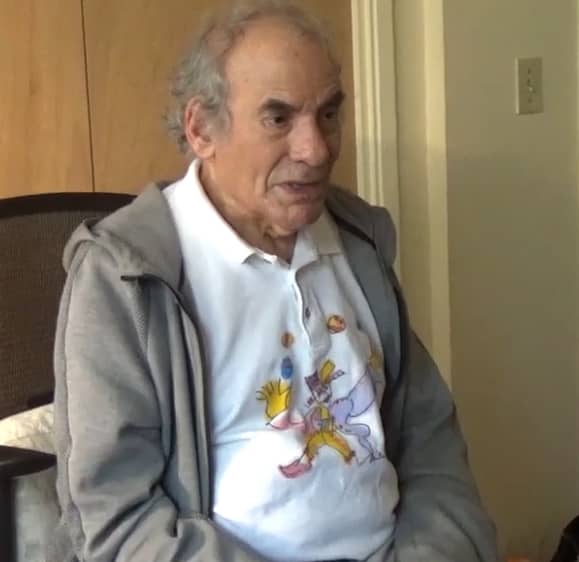
[The photo of Ben is from the film On the Life Force Psychotherapy Method (https://vimeo.com/348149483?signup=true), published on July 15, 2019, by Life Force Poland – Karolina Rynkowska-Rajewska and Elżbieta Pakoca]
When Lowen wanted to learn something, he learned it – he didn’t say this or that wasn’t part of bioenergetic training, because he was shaping that training himself. I wonder: if Lowen hadn’t normalized standing work, would we now be so fiercely defending the supine position? A method remains alive only until it begins to be taught based on a codified curriculum that must be followed, listening to trainers and preferably not asking difficult questions. Of course, one can do what Lowen did with Reich – and we know it makes sense – but does it really have to be necessary every time? The standing position only appeared in the 1950s. Lowen discovered, experimented, discarded what didn’t suit him, and encouraged the development of Bioenergetics. That’s also how Ben taught me and the values he passed on.
At the last workshop Ben led in Victoria, he wished me and the other participants to continue developing “Life Force,” to teach and share the method with everyone. The personal commitment I received from Ben was certainly more than I could handle at the time – but it reflected his deep desire to share and his trust that the gift would be properly used. Ben assumed that the people he had shared his materials and knowledge with would pass them on widely – but no one really knows who received what. That’s why it’s so important to publish everything we know about Ben’s work and strive to reconstruct parts of his intuition, to pass them on and develop them in the best possible way.
When I talk about AYLF, when I do the exercises with clients, when I share this knowledge with psychotherapists, I’m often asked where they can read more, learn more, or listen to more about AYLF. The simplest answer is that one must experience it – but we know that learning takes many forms, and experiential learning is just one of them. Referring enigmatically to “experience” can come off as condescending – a form of passive aggression. Life Force can be explained, conceptualized – and I do that, and I know I’m not the only one, and certainly not the first.
I recently found an interview in which Dr. Giuseppe Cappelletti talks about “Life Force.” The interview is part of a clinical psychology thesis by Dr. Ruggero Ghiglia titled “Accessing Life Force: The Psychotherapeutic Approach of Bennett Shapiro”. I wrote to both of them and didn’t receive any response for a long time, but eventually I did. Dr. Ruggero Ghiglia replied and shared his thesis, which he defended at the University of Turin. I read it with great interest and found that it’s the first work in the world to present AYLF in such a comprehensive way.
In his thesis, Dr. Ruggero Ghiglia asks two key questions:
- Can the AYLF method be considered a complete, coherent psychotherapeutic method?
- Or should it rather be regarded as an extension of classical Bioenergetic Analysis, which focuses on specific aspects such as working with resistance?
The author offers nuanced answers, showing – through a wide theoretical and practical lens – how body psychotherapy arrived where it is today and what significance Dr. Shapiro’s work holds. Sigmund Freud, Sándor Ferenczi, Wilhelm Reich, Carl Gustav Jung, Donald Winnicott, Alexander Lowen, Eric Berne – they all provide context for Bennett’s approach. This broad, humanistic perspective demonstrates that within bioenergetic thinking, there are specialists with a wide view, seeing interdependencies that are often overlooked or underappreciated within the confines of strict clinical practice.
I sincerely hope that Dr. Ruggero Ghiglia’s work will be published and further developed as a critical, meta-level reflection that contributes to the evolution of the method within Bioenergetic Analysis and serves as inspiration for other therapeutic practices.
Ben, as is widely known, did not draw upon frameworks outside of Bioenergetics in his work or thinking. He remained faithful to Lowen and to himself, as he understood this language and was able to deconstruct and reconstruct all essential psychological processes within it. He was a true humanist who sought to understand psychophysical reality, to teach, and to present it in an aesthetic, accessible, and humorous way.
AYLF, short for “Life Force,” is the result of Ben’s many years of work—work that was known and respected by Lowen. Ben continued to create “innovative programs,” and “Life Force” emerged from these. I am not certain whether Ben published any texts on this subject in “Bioenergetic Analysis”—if he did, I am including my email below for contact, as I would love to read it. Ben himself said that “Life Force” is a therapeutic approach that grew out of Bioenergetic Analysis and is defined using its language. AYLF develops one of the areas of Analysis related to the consequences of trauma—namely, splitting—whose effects include the creation of internal psychophysical entities. These can function on a spectrum ranging from: independent sub-personalities (even in the absence of formally diagnosed conversion disorders), possessing a defined biomechanical character (energy blocks, limitations in mobility, expression, vitality), physiological patterns, and cognitive traits tied to their origin period, to: fragmented parts remaining outside the main flow of the psyche, yet possessing all possible psychophysical features. These can be called introjects, internal representations, unconscious figures, or ego states.
This concept has been known since psychoanalysis, with its roots traceable even to the work of James Braid (1795–1860), the Scottish surgeon, philosopher, and the person who coined the term “hypnosis.”
Theories and therapeutic practices in this area led to the development of Transactional Analysis (TA) by Eric Berne and Ego State Therapy (a method conceptualized by John G. Watkins and derived from the psychoanalytic thinking of Paul Federn and, of course, Sigmund Freud).
As it turns out, the concept of personality segmentation is not new. Each generation of specialists creates its own version of therapeutic work that broadens our understanding and, consequently, our practice. Dr. Bennett Shapiro has made a unique contribution in this regard.
All known versions of intentional work with ego states define them as psychological phenomena and base their work on this understanding. Even when these approaches—including TA, EST, and its descendant IFS (Internal Family Systems)—speak of working with somatic ego states, their primary assumption remains rooted in the psyche, with emotional states having a physiological correlate (but not a biomechanical one).
This narrow interpretation of the somatic hypothesis (the functional identity between an individual’s psychological and somatic defenses) influences how we understand patients, disorders, health, treatment, and the formulation of new hypotheses about psychopathology and method development.
Shadow work according to Carl Gustav Jung also fits into this trend, as does Transference-Focused Psychotherapy by Otto Kernberg, whom Ben quoted—one such quote became a guiding point in my education. I will quote it here, exceptionally:
“It is absolutely impossible for a client to liberate themselves from their introjects if the therapist is unable to identify with what the client projects onto them. The therapist must be able to identify with the concentration camp commandant, the tyrant’s henchman, the incestuous father’s sexual feelings, or the sadistic mother, and must also feel the pleasure of destruction, the pleasure of dropping the bomb, the pleasure of sadistic aggression—because all of us possess the readiness to do so in our unconscious.” —Otto F. Kernberg, Persönlichkeitsentwicklung und Trauma (im) Persönlichkeitsstörungen. Theorie und Therapie, 1999, vol. 3, pp. 5–15.
How is a therapist supposed to do that while sitting in a chair, experiencing everything internally, afraid of expressing themselves because they have never explored these aspects in a controlled, therapeutic, laboratory setting? A rhetorical question.
Ben went much further by creating a Bioenergetic and comprehensive version of Ego State Therapy. The assumption that personality also forms in the physical—and thus physiological and morphological—structure of the body influences how we understand what we call ego states and how we work with them. This is a broad interpretation of the somatic hypothesis.
When I presented my conclusions to Ben (by then I was already well acquainted with clinical hypnosis and EST), he paused and said: “That’s not how I think… but it’s possible.” Ben thought only within the framework of BA, and because of this, he didn’t have to compare different systems, align definitions, or absorb assumptions not rooted in Bioenergetics. That is why AYLF likely remains the only approach offering a bioenergetic understanding of ego state therapy—one that is based on physical bodywork, biomechanics, physiology, morphology, and vitality as expressions of psychic life—placing these manifestations at the forefront and deriving therapeutic technique from them.
Ben is, in a direct line, the heir to the active psychoanalytic technique introduced as early as 1921 by Sándor Ferenczi. My comparison to EST is only metaphorical, because Ben’s approach offers its own hypotheses about the formation of ego states, working with them, and defining their roles, functions, and dynamics.
Ben treated ego states very broadly, without the limiting frameworks that assign them specific roles such as protector, hero, wounded self, etc. Functions emerged through the therapeutic process, and the main ego states are so general that they offer much greater creative freedom to the therapist. Without going into detail, these are: the Natural Child, the Adult, the Demons, and the Wounded Child (Dr. Giuseppe Cappelletti lists more in his work, acknowledging the development of Ben’s thought).
Although it might seem easy to match the ego states identified by Ben to Freud’s terms (Natural Child – Id, Adult – Ego, Parental Demon – Superego), once one enters the psychotherapeutic experience and works with these entities, it becomes clear that this is not the case.
Ben outlines five goals of Life Force:
- Strengthening the Adult – cognitive functions, intellect, control, calculation; maturity; the ability to experience neutrality linked with an adequate assessment of reality; interest in what is happening inside and outside of us.
- Revitalizing the Natural Child, the one we were born as (not the Originally Wounded one), who seeks full expression and growth. The Natural Child is our body.
- Connecting the Adult with the Natural Child. As Ben said, this relationship resembles the bond between a Grandfather (a metaphor for the distance of life experiences) and a Grandchild. Since Grandparents seek the life force of the Natural Child—their own body—they have lost their excitement for the world, though they still long for it. They can borrow some of that energy in exchange for sharing their understanding of life and perspective.
- The fourth aspect is working with humor, as playfully as possible. Humor facilitates contact with difficult issues. Ben noted an essential dynamic: defense mechanisms activate when matters are treated seriously. A patient quickly learns when to be serious and when to laugh, aligning with the unconscious expectations of the therapist to avoid rejection. Play and humor, where appropriate, introduce a lighter atmosphere, ease defenses (“the devils”). This approach, according to Ben, also encourages clients to continue Life Force exercises on their own. The “devils” can be understood in terms of the ancient “daimonion”.
- The fifth aspect is Honoring Resistance, which manifests on the level of emotions, boundaries, and contact, as reluctance to connect with oneself and with others.
Ben used the metaphor of the five fingers of the hand:
– The middle finger represents the Adult,
– The pinky is the revitalized Natural Child,
– The ring finger is the connector between them,
– Humor is symbolized by the index finger,
– And the thumb represents Resistance.
Another metaphor is a Juggler juggling five balls, designed by Ben’s wife, an artist. The juggler entertains others and can keep many balls in the air simultaneously—a master of skill (in one of the photos Ben is wearing a T-shirt with a picture of a juggler).
Life Force can be described as a therapy composed of five therapies. The therapist plays an active role, with interventions that challenge the defenses limiting the client’s vitality. In some sense, it’s a strategic approach, similar to Ericksonian therapy and similarly saturated with trance phenomena (states of heightened suggestibility). Although Ben never mentioned clinical hypnosis, it was clear he knew how to use it. He was aware of the limited time available, which made him firm. If he felt I was delaying during training or therapy, he would say that Life Force is for adults—those aware of why they are learning, possessing sufficient self-awareness, the ability to manage their emotions, and who no longer require caretaking in the context of therapy or training. They can provide that care for themselves.
From experience, I now know that the Adult aspect also requires the ability to seek out psychotherapy for oneself when needed—and to recognize that need. An Adult seeks therapy not as part of a training program, but as an adequate response to developmental needs.
This complex model of reclaiming life force is carried out, among other things, by activating defenses—”devils” (personifications of protective, adaptive ego states), energizing them (psychophysically), and assimilating their strength. These “devils” are the parts that make people like Ben—teachers, therapists, those with some form of authority—when they feel discomfort in contact, project it outward onto training groups, participants, patients. Then they reinterpret the reactions of the other side as transference, easily proving the problem lies externally. The projection of “devils” works through a feedback loop, and the therapist’s task must follow the logic of the therapeutic process.
When a therapist is unaware of these phenomena, or only declaratively aware, their actions become iatrogenic, often leading not only to incidental violence (as Dr. Nilofer Kaul, a psychoanalyst from New Delhi, puts it) but also to the creation of systems that, “for the good of the organization, method, patients,” unknowingly and in good conscience cause harm. When the negative effects of their actions become evident, they justify, rationalize, and withdraw with a cold, emotionless neutrality—something that could easily be called by another name. It’s no great feat to admit a mistake in a way that makes the patient feel guilty for their behavior in the session. This happens when the professional is unaware of their own “devils.”
And ultimately, they can’t be blamed if their own teacher also didn’t know their “devils”—and the training hierarchy makes it impossible to exit the situation with dignity.
Ben’s stance on this is clear. He was the only person I’ve met who could stand in the truth of his inner life in front of another human being and, with his whole being, ask: Can we be in this together? Ben believed that our “devils” need to be trained, not exorcised! Energizing them allows us to identify more fully with their power and make them an infinite resource. Some say it’s about seizing power—but that only reinforces dissociation. According to Ben, this is a sign the “devils” are at work, maintaining adaptive internal divisions.
For a patient, fighting against the therapist’s hidden hostility may be heroic, but it is always futile—and leads to retraumatization. This is important in every therapeutic process, and in trauma therapy, it becomes a credo.
According to Ben, if you hear yourself (or someone else) saying they want to do something „for the good of others,” be wary—especially if that person is a psychotherapist. In this respect, Ben was the most engaged teacher I’ve met. He monitored his own “devils,” spoke about them without fear, released them into the open, and discussed them together.
Reversing Carl Rogers’s views, he defined AYLF as „therapist-centered therapy.” He reminded us that if the therapist is unaware of their “devils” and doesn’t hear their cracking beneath the iceberg’s surface (a metaphor from Ben’s article “Will the Iceberg Sink the Titanic”), the client will not be able to contact their own “devils” and bring them to the surface—remaining stuck in collusion or conspiracy.
“Devils” can be identified both individually and organizationally. Their actions are primarily revealed through countertransference, which Ben understood as the full psychosomatic experience of oneself in contact with others. During a bioenergetic therapy course, I read Vita Heinrich-Clauer’s article on somatic resonance and immediately recognized where this idea came from. There was no need to wait for its conceptualization by Lowen or speculate—somatic resonance in this sense had long been present in psychodrama and therapy, just like Reich’s muscular armor.
Later came limbic resonance, which further emphasizes human attunement. Many discoveries followed—there’s no need to reinvent them.
You might say, “But this isn’t bioenergetics.” Actually, this is bioenergetics—once we accept that its foundation is the broadly understood somatic hypothesis, it’s a method capable of self-learning, open to difference, and able to retain its identity. It can speak the language of bioenergetics, as the creator of AYLF did. We know now that he was trained in Gestalt therapy, meaning he used more than one theory to understand psychopathology. Lowen didn’t need to worry about that, since as a psychiatrist he already had mastery of nosological, psychoanalytic, and Reichian bioenergetic models.
I don’t know if Lowen encouraged his students to study medicine and psychiatry like he did to ground themselves in psychological and pharmacological care. He might have wanted his students (once basically trained) not to guess, wait for explanations, or demand additional programs after four years of bioenergetic training just to learn the basics of therapeutic contact, relationship, process, or diagnosis. Lowen had that knowledge, so it seems natural to teach it—to train professional psychotherapists, not just method specialists.
At the same time, Lowen had total freedom to develop what interested him and wove it into his method. His successors don’t have that freedom, and even less so the next generations, for whom Bioenergetics is often seen as a bronze monument. Ben showed me that no therapy—and especially Bioenergetics—is a monument, and few creators ever intended to stop anywhere. Wilfred Bion left Melanie Klein’s path and created his own. Jacques Lacan was expelled from the Psychoanalytic Society for ethical reasons and developed his own therapy. Milton Erickson nearly met the same fate in the society he founded. Perhaps Bennett feared a similar story, which is why he didn’t push—he simply waited humbly to have his discoveries recognized and integrated into the great river that psychoanalysis is becoming.
What is Life Force, according to Ben?
It is the direction present in every living organism that leads it toward full development—on every possible level. Life Force is our right and our potential. We never fully achieve it; it is an ideal we can strive toward for a lifetime. David Berceli speaks in a similar spirit, when he talks about continuously expanding the space for safe connection with others—and he knows what he’s talking about.
Due to complex life circumstances, some of our spontaneous impulses to come into the world were frustrated and halted—forming “devils” or wounded psychosomatic ego states. These are the result of adaptive mechanisms.
Although I’ve seen Life Force exercises described as fun, simple, and enjoyable, they become that way only after a long time. Done honestly, they consistently pull out the parts we don’t want to look at. That’s not pleasant or funny. Though the intensity may release so much energy that the nervous system responds with immediate dissociation and a wave of endorphins. Exercises might then seem exciting and memorable. Their false mask is easily revealed by questioning the effects of that „happiness.” Still, if you asked Ben what the best way to contact the Life Force is, he would answer without hesitation: “Be playful.”
Ben understood how this mechanism worked — that crossing the boundaries of personal safety evokes defensive mechanisms. No one is exempt from this, especially psychotherapy teachers or people in any position of power, because there is often no one left to give them feedback — and giving it can be costly, even if the cost is only emotional. Only emotional.
On a column that once stood at the entrance to the Temple of Apollo in Delphi, two famous maxims were inscribed: “Know thyself” („gnothi seauton”) and “Nothing in excess” (meden agan). Ben’s therapeutic philosophy embodies both of these principles.
Above, I have sketched a very modest outline of just one aspect of Ben’s work — the thread involving “devils” and my understanding of the context in which Life Force was created and received. I have included no footnotes and gave it a personal tone. I will continue working with his legacy — I will train others, watch myself closely, supervise myself and others, conduct therapy, and I hope to collaborate with those for whom Ben is as important as he is to me. Important transferentially, in a fatherly way, and simply as a human being who moved me with his Life Force and brilliance.
All aspects of Ben’s therapeutic approach are thoroughly bioenergetic. Let me repeat: Ben did not feel respected by the community he had helped educate. What he did feel was the commitment of a community that understood his innovation. He took steps to establish a new international, autonomous association to develop his ideas and practices. In the fall of 2018, the formation of the Association was announced, and it was to be presented during workshops in Switzerland. These were led by Bennett Shapiro (online from Canada), and Giuseppe Cappelletti and Cristina Nobile — AYLF teachers trained to teach the method.
However, during the summer workshops in August 2018, Ben withdrew from the idea, and the project remained unfinished. I don’t think this was accidental. Ben was likely waiting until the very end for recognition from the IIBA and for his approach to be formally accepted as a post-graduate training path for bioenergetic therapists. Perhaps he hoped that through a few bioenergetic therapists, AYLF would be presented and introduced to the world in such a way that teaching it would become a respected standard within BA.
I don’t know whether Ben’s withdrawal signaled his disagreement with allowing the method to develop under arrangements with his Italian colleagues, who were already prepared to conduct trainings in this method. Perhaps Ben forbade them from doing so.
At that time, two more people appeared, through whom I also got to know Ben. They started organizing seminars with Ben in Poland, and thanks to them, the website lifefore.pl was created with a great deal of information about the method. Some time ago, most of this information, along with materials Ben had shared, was removed.
In my opinion, it is important to define the research field related to AYLF, as Dr. Ruggero Ghiglia is doing. Ben did not engage in hermeneutics, which is why his work is thoroughly practical. If we want to bring AYLF closer to, and especially integrate it within, BA, we need to talk about it openly — to critically examine Ben’s legacy not only in his own language but also using the tools available in the humanities. AYLF is bioenergetics, even if a dedicated association were to be created, it wouldn’t change that fact. From my perspective, it would be much better to place Ben on the BA map.
When people who embrace his legacy go silent and withhold this knowledge, I wonder what lies behind that. What “devils”? Or whose devils are we afraid of? The threat of losing certification? Teacher status? Expulsion from the organization? Some other form of punishment?
Of course, I also wonder what my own “devils” are that encourage me to write a text like this, and what reactions they might provoke — whose and what kind of “devils”? An open conversation is a treasure, because it reveals what and how we think. If something remains only in our own thoughts and is not reflected in the minds of others, we can go no further than the representations we already use.
How many Bennetts Shapiro have there already been? I suspect not many, but there must have been a few. What happened to them? Who cannot engage in conversation? Who has no place, or how can we make one?
Ben’s thinking is a treasure and deserves recognition, dissemination, and development. Personally, I hope that this will truly happen, and the best indication of that is the work of Dr. Ruggero Ghiglia. This is important for many reasons. One of the most important concerns honoring the founders of a system — whether that be a company, organization, method, or family. Failing to do so, failing to acknowledge their rightful place, exposes oneself and others to unconscious processes that will try to restore that memory in other, usually unpleasant ways.
We already know so much about the effects of transgenerational trauma that there is no need to keep reinventing the wheel. Does BA teach anything about transgenerational trauma? It is essential.
In summary. Although I used to think that knowing the foundations of mental work with ego states was enough, that one could do without bioenergetics or other Reichian approaches — it turns out that this is not possible. Nor can we do without Freud, Ferenczi, Federn, and many others.
The difference between methods based on a narrow or broad understanding of the somatic hypothesis is fundamental — I’ve written about it before. A therapist who embodies both assumptions can find their golden key, which surely fits some lock. And if there is a lock, then there must be a chest that hides treasures — and one only has to turn the key and lift the lid to reach them and make use of them.
Ben, this is for you.

0 komentarzy